You've seen the ads. You've heard the debate. And if you're shopping for a diamond right now, you're probably stuck between two options that look identical to the naked eye - but come with very different price tags, stories, and opinions attached to them.
Natural diamonds. Lab-grown diamonds.
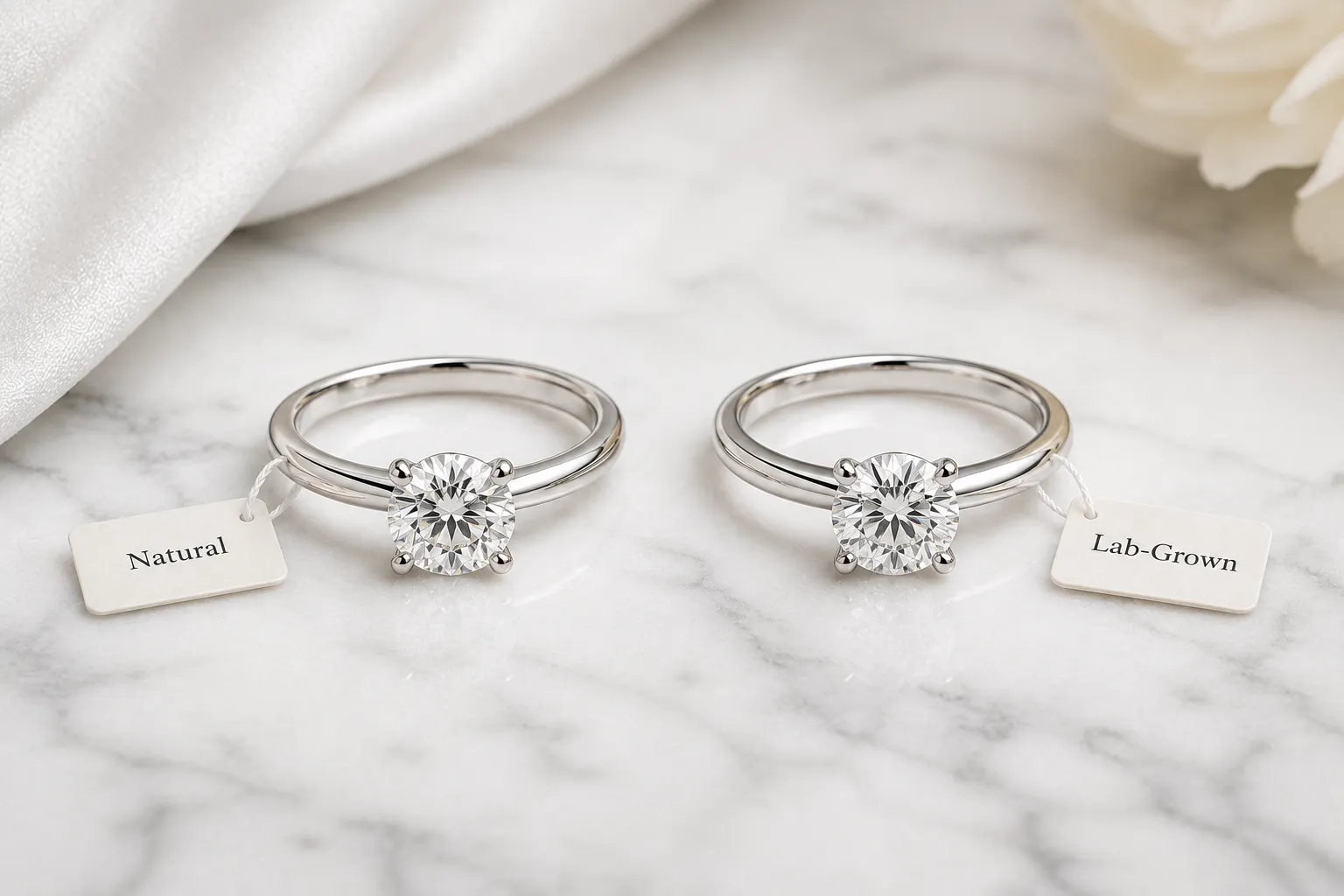
One comes from the earth. One comes from a laboratory. But here's what the industry doesn't want you to know: chemically, physically, and optically, they are the same stone.
At Nuralet, we sell both. So we have no reason to mislead you. This post breaks down everything - what they actually are, how they're made, what they cost, and which one makes sense for you. No fluff. No agenda. Just facts.
What is a natural diamond?
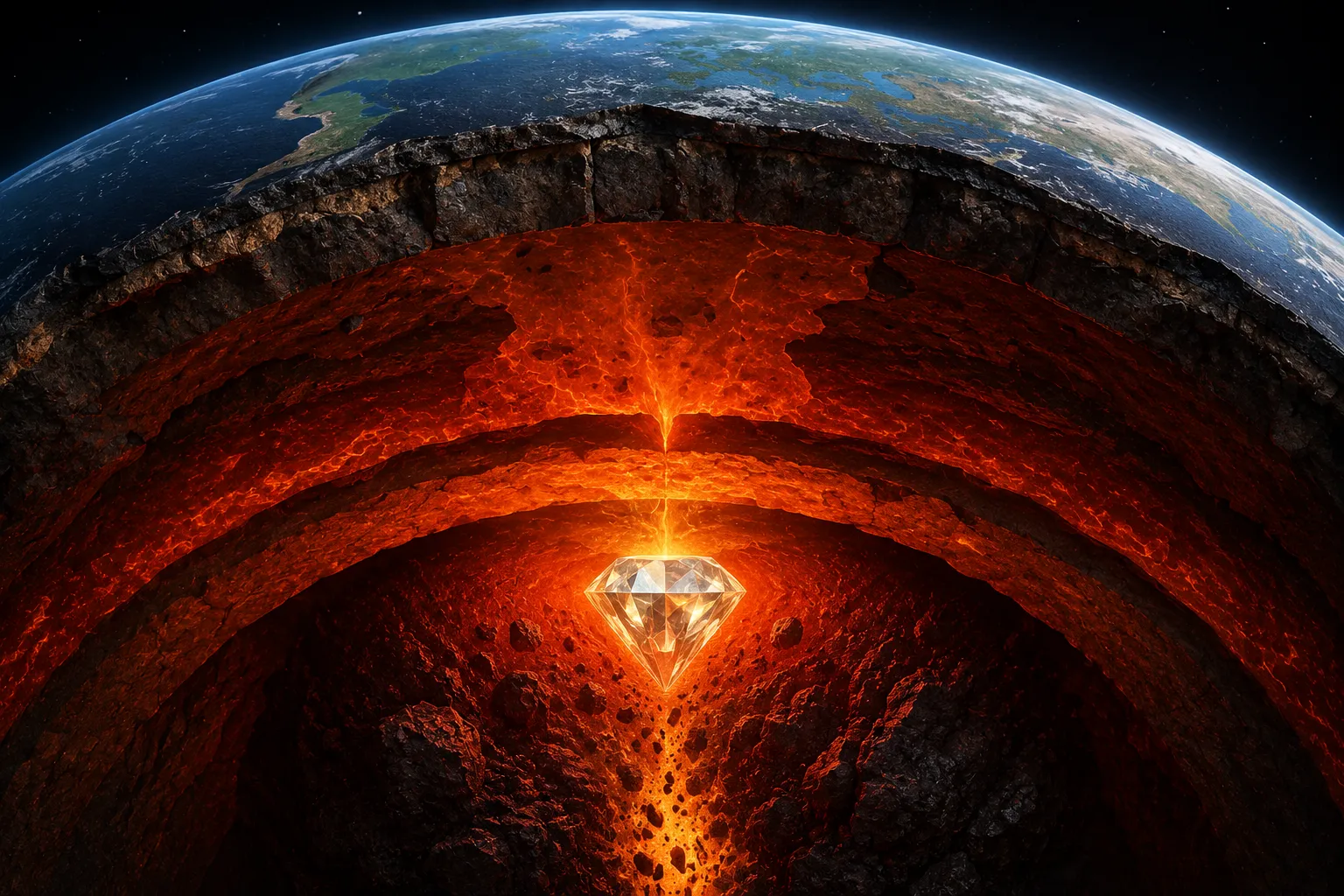
A natural diamond is formed deep inside the earth - roughly 100 miles below the surface - under extreme heat and pressure over billions of years. Volcanic eruptions push them closer to the surface, where they're eventually mined.
The process is ancient, rare, and - depending on who you ask - romantic.
Natural diamonds are graded by the 4Cs: Cut, Colour, Clarity, and Carat weight. These grades are set by independent labs like GIA (Gemological Institute of America) and determine the diamond's quality and price.
What is a lab-grown diamond?
A lab-grown diamond is a diamond, grown in a controlled laboratory environment that replicates the exact conditions found inside the earth. Same carbon atoms. Same crystal structure. Same physical and chemical properties.
There are two methods used to create them:
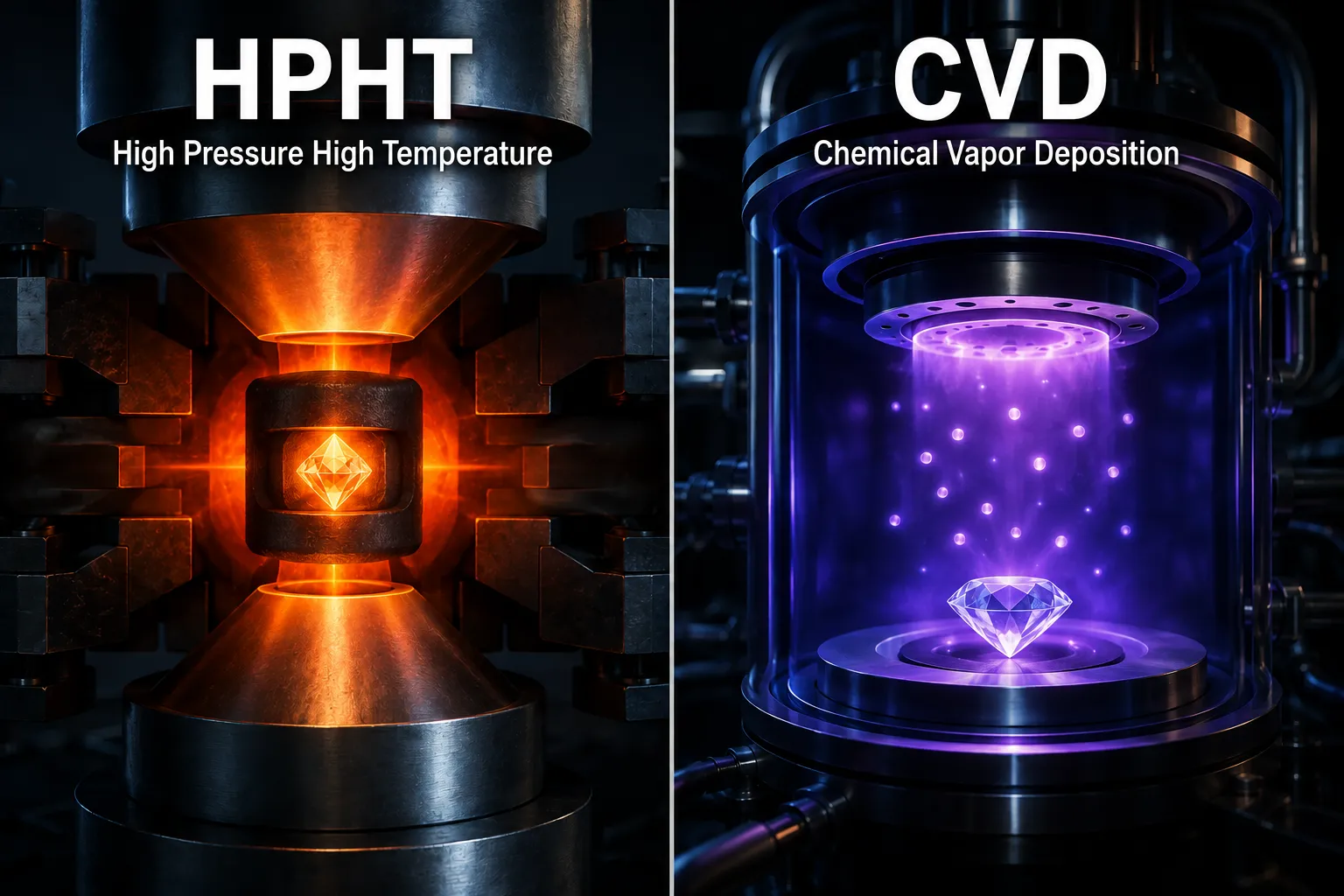
HPHT (High Pressure High Temperature) mimics the natural underground conditions by applying extreme pressure and heat to a carbon source. The result is a diamond that grew the same way nature intended, just faster and in a controlled setting.
CVD (Chemical Vapour Deposition) introduces carbon-rich gas into a chamber, which then crystallises onto a diamond seed plate layer by layer. It's more precise and increasingly the industry standard.
Both produce real diamonds, certified by independent labs. IGI grades them on the same 4Cs as a natural stone. GIA, since late 2025, describes a lab-grown stone as Premium or Standard instead of giving it full colour and clarity grades.
Are lab-grown diamonds real diamonds?
Yes. Full stop.
This is the biggest misconception in the jewellery industry. Lab-grown diamonds are not cubic zirconia. They are not moissanite. They are not simulants. They are diamonds - the same carbon crystal, just grown above ground instead of below it.
The FTC (Federal Trade Commission) updated its guidelines in 2018 to confirm that lab-grown diamonds are, in fact, real diamonds. Even GIA - the most respected gemological institution in the world - examines lab-grown diamonds and issues reports on them.
A trained gemologist cannot tell the difference with the naked eye. The only way to distinguish them is with specialised equipment that detects trace elements at a microscopic level.
If someone tells you lab-grown diamonds are fake, they're wrong, or they're selling you something.
The price difference - this is where it gets interesting
This is the number one reason people are switching to lab-grown, and the numbers speak for themselves.
On average, a lab-grown diamond costs 50-80% less than a natural diamond of the same size, cut, and quality. That means a stone that would cost $10,000 mined can be purchased lab-grown for $2,000-$5,000.
Why? Because the supply chain is completely different. Natural diamonds require mining operations, international transport, multiple middlemen, and decades-old market control structures. Lab-grown diamonds skip almost all of that.
The result: you get a bigger, better stone for the same budget.
How do they compare on quality?
Natural and lab-grown diamonds are measured against the same physical properties. Here's a direct comparison across the metrics that matter:
| Natural diamond | Lab-grown diamond | |
|---|---|---|
| Chemical composition | Pure carbon (C) | Pure carbon (C) |
| Crystal structure | Cubic | Cubic |
| Hardness (Mohs) | 10 | 10 |
| Grading | 4Cs at GIA and IGI | 4Cs at IGI; Premium or Standard at GIA |
| Brilliance & sparkle | Identical | Identical |
| Inclusions | Yes | Yes |
| Detectable difference | Only with lab equipment | Only with lab equipment |
The bottom line: quality is not a differentiator. A well-cut, high-clarity lab-grown diamond will outshine a poorly cut natural diamond every single time.
What about resale value?
This is the one area where natural diamonds have a real, honest advantage - and we're going to tell you the truth about it.
Natural diamonds hold their value better over time. The controlled supply, decades of brand conditioning, and perceived rarity mean the resale market for natural diamonds is more established.
Lab-grown diamonds, on the other hand, have seen significant price drops over the past few years as production technology improved and supply increased. Their resale value today is lower than natural diamonds on a percentage basis.
However, here's the perspective shift nobody gives you:
Most jewellery is never resold. An engagement ring, a pendant, a gift - it's worn, it's loved, it has emotional value that has nothing to do with a resale chart. And if you spent $3,000 on a lab-grown diamond instead of $10,000 on a natural one, you're already $7,000 ahead regardless of resale.
Resale value matters if you're investing. If you're buying jewellery to wear and love, lab-grown wins on value every time.
The environmental angle
This is a complicated one, and we're not going to oversimplify it.
Traditional diamond mining has a significant environmental footprint. It involves moving enormous amounts of earth, heavy machinery, land disruption, and in some regions, serious human rights concerns. The Kimberley Process was introduced to address conflict diamonds, but critics argue it doesn't go far enough.
Lab-grown diamonds require significant energy to produce. However, many producers are shifting to renewable energy sources, and the overall land and water impact is dramatically lower than mining.
If sustainability is a priority for you, lab-grown is generally the more responsible choice, especially if the producer uses clean energy. At Nuralet, we source from responsible producers, and we're happy to share more details on request.
Who should buy a natural diamond?
Natural diamonds make sense if:
- You view it as an investment or heirloom. Natural diamonds have a longer track record for holding value and are more established in estate jewellery markets.
- The origin story matters to you. Some people value the fact that their stone is billions of years old and came from the earth. That's a real, legitimate reason.
- You're buying for a collector or someone who specifically requested it. Some people simply want natural, and that preference deserves respect.
Who should buy a lab-grown diamond?
Lab-grown diamonds make sense if:
- You want more stone for your budget. This is the most common reason, and it's completely valid. A 2-carat lab diamond at the price of a 0.75-carat natural is a real choice.
- You want a cleaner supply chain. No mining, no geopolitical risk, no grey-area sourcing.
- You're buying jewellery to wear, not to resell. If it's going on a finger or around a neck to be loved daily, lab-grown is the smart financial decision.
- You want the same look, the same sparkle, the same certification without paying the premium for what is essentially a marketing story.
How to choose the right diamond, natural or lab-grown
Whether you go natural or lab-grown, the 4Cs still determine quality. Here's a quick guide on where to prioritise:
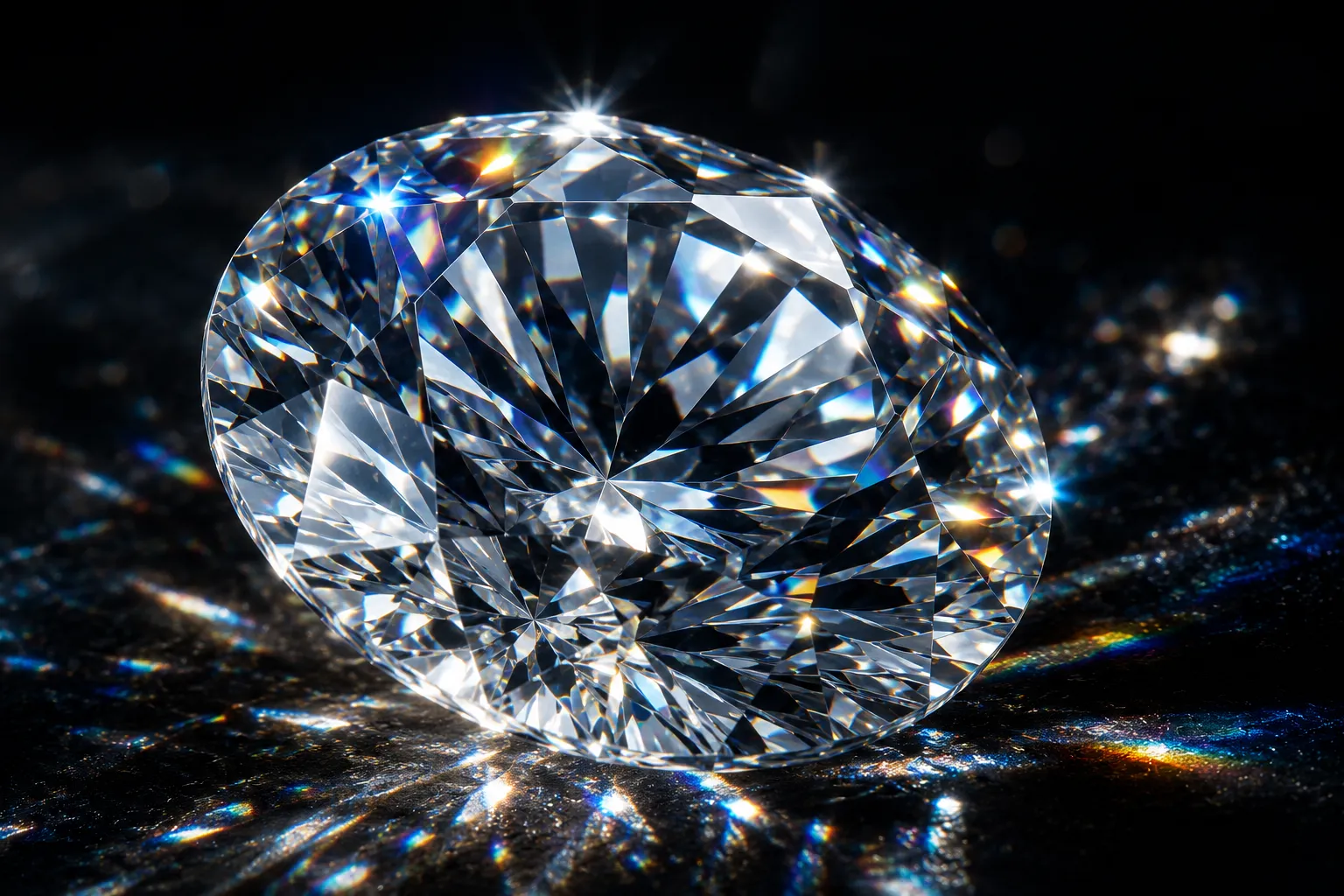
Cut is the most important factor. A well-cut diamond reflects light better than any other variable. Never compromise on cut. Aim for Excellent or Very Good.
Colour: for white diamonds, aim for G-H. These appear colourless to the naked eye but cost significantly less than D-F grades.
Clarity: VS2 or SI1 is the sweet spot for most buyers. Inclusions at this grade are not visible without magnification.
Carat: with lab-grown, you can go bigger at the same price point. Use the savings from colour and clarity to get more carat weight.
| Priority | Aim for | Why |
|---|---|---|
| #1 Cut | Excellent or Very Good | Decides sparkle more than anything else. Never compromise. |
| #2 Colour | G-H | Looks colourless to the eye, saves serious money against D-F. |
| #3 Clarity | VS2-SI1 | Inclusions invisible to the naked eye at this grade. |
| #4 Carat | Go bigger with lab-grown | Put the savings from the other three here. |
The bottom line
Here's the honest summary:
Lab-grown diamonds are real diamonds. They are chemically and physically identical to natural diamonds. They cost 50-80% less. They are certified by independent labs. They sparkle the same way.
The only meaningful differences are origin, price, and - for some buyers - the emotional weight of where the stone came from.
If you're buying jewellery to wear, to give, to celebrate something, lab-grown is the smartest choice on the market right now. You get more stone, more quality, more value, and a cleaner supply chain.
If origin matters deeply to you, natural diamonds are still beautiful, still legitimate, and we carry them too.
At Nuralet, we'll never push you toward a decision that isn't right for you. But we'll always give you the truth to make that decision confidently.
Frequently asked questions
Are lab-grown diamonds real?
Yes. Lab-grown diamonds have the same chemical composition, crystal structure, and physical properties as natural diamonds. They are certified by independent labs: IGI grades them on the same 4Cs as natural stones, and GIA issues reports describing them as Premium or Standard.
Can you tell the difference between a natural and lab-grown diamond?
Not with the naked eye. Not even a trained gemologist can tell visually. Specialised equipment that detects microscopic trace elements is required to identify the origin of a diamond.
Do lab-grown diamonds hold their value?
Lab-grown diamonds have lower resale value than natural diamonds at this point in time. However, most jewellery is never resold. If you're buying to wear and love, not to resell, lab-grown offers significantly better value for your money upfront.
Are lab-grown diamonds more ethical?
Generally, yes. Lab-grown diamonds have a much lower environmental footprint than mined diamonds and eliminate concerns around conflict sourcing. At Nuralet, all our diamonds come with full documentation.
What is the best size lab-grown diamond to buy?
With lab-grown pricing, most buyers find that the 1-2 carat range offers the best value. You can reach a size that would be out of budget in natural diamonds, while keeping excellent cut and clarity grades.
At Nuralet, we carry both natural and lab-grown diamonds across our jewellery collections. Browse the collection or reach out directly - we're happy to help you find the right stone for your budget and style.