If you have ever shopped for a gold chain, a ring, or any fine jewellery, you have seen the numbers - 10K, 14K, 18K, sometimes 24K. Most people pick one without really knowing what it means. They go by price, or by what sounds more impressive, or by what the salesperson recommended.
This post gives you the actual truth. What each karat means, how it affects the look, the durability, the price, and which one makes the most sense for what you are buying.
No fluff. No upsell. Just facts, so you can make the right call.
What does "karat" actually mean?
Karat is a measure of gold purity. It tells you how much of the metal is pure gold versus other alloys like silver, copper, zinc, or nickel.
Pure gold is 24 karats. That means 24 out of 24 parts are gold, 100% pure. Every karat below that is a fraction of 24.
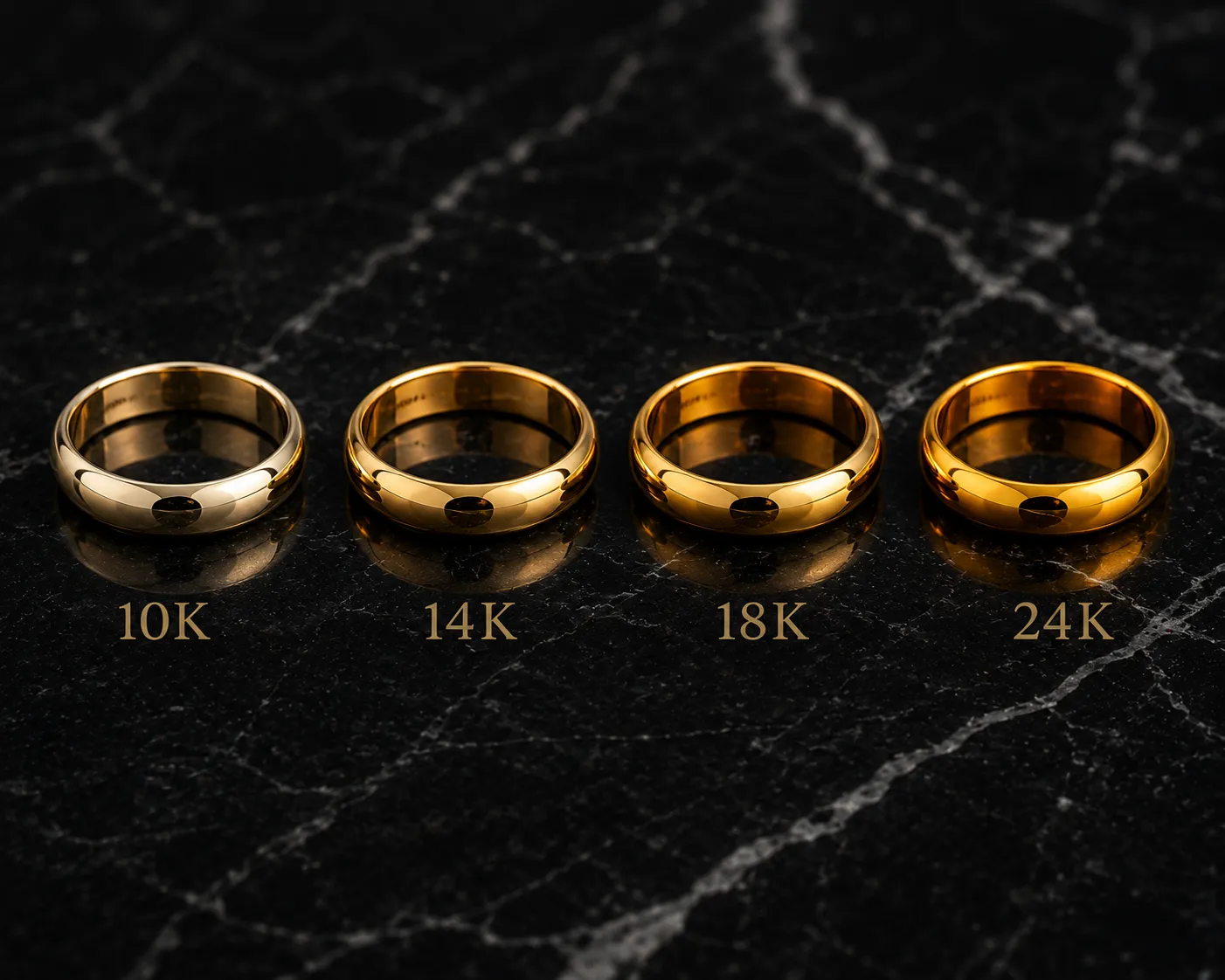
- 10K = 10/24 = 41.7% pure gold
- 14K = 14/24 = 58.3% pure gold
- 18K = 18/24 = 75% pure gold
- 24K = 24/24 = 99.9% pure gold
The remaining percentage in each alloy is made up of other metals, and those metals are not just filler. They change the colour, the hardness, the durability, and the price of the final piece.
10K gold - the toughest, most affordable option
10K gold contains 41.7% pure gold, the minimum karat legally allowed to be sold as "gold" in the United States. The remaining 58.3% is alloy metals, usually copper, silver, and zinc.
Because it has more alloy than gold, 10K is the hardest and most scratch-resistant of all gold jewellery. It is also the most affordable, which makes it a popular choice for everyday pieces that take a beating.
The trade-off is colour. 10K yellow gold looks slightly paler and less rich than higher karats. It can also cause skin reactions in people with metal sensitivities, since the higher alloy content means more nickel or copper contact with the skin.
Best for: everyday wear, men's chains, budget-conscious buyers, pieces that need to withstand daily use without getting dinged up.
Avoid if: you have sensitive skin, or you want the deepest, richest gold colour.
14K gold - the sweet spot
14K gold is 58.3% pure gold. It is the most popular karat in the United States and for good reason - it hits the balance between purity, durability, price, and colour.
It is hard enough to handle daily wear without scratching easily. It is rich enough in gold content to give you that warm, classic yellow gold look. And it is priced at a point where you can afford real size and weight without breaking the bank.
At Nuralet, 14K yellow gold is our most popular metal across chains and bracelets, and it is what we recommend to most buyers as their default choice.
Best for: Cuban link chains, rope chains, everyday rings and bracelets, anyone who wants a balance of quality and value. The go-to for most jewellery purchases.
Avoid if: you specifically want the highest gold purity, or you are buying a piece primarily as a gold investment.
18K gold - the premium choice
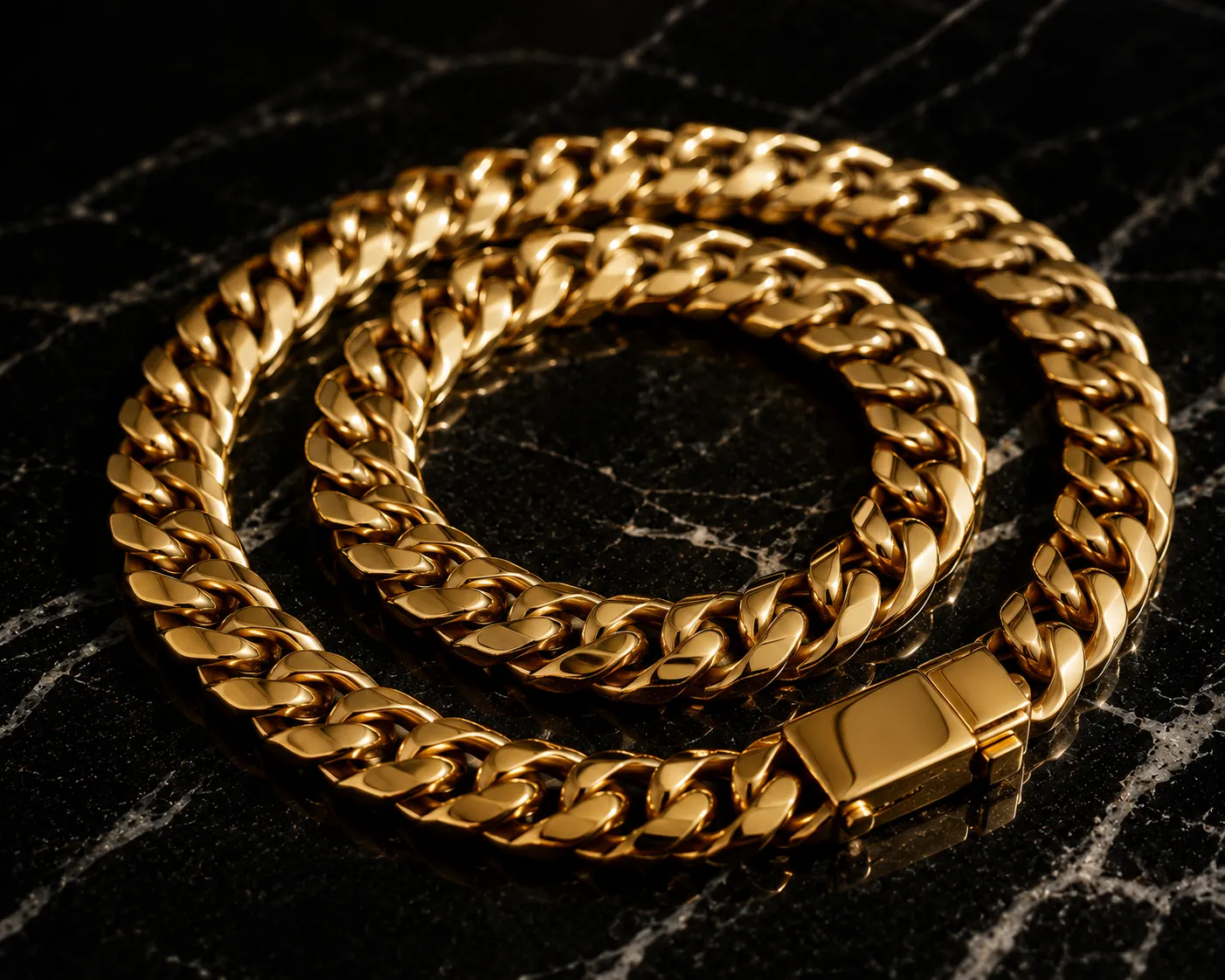
18K gold is 75% pure gold, a significant jump from 14K. The colour is noticeably richer and deeper, with that unmistakable warm yellow most people picture when they think of fine gold jewellery.
The higher purity also means softer metal. 18K gold scratches more easily than 14K and requires more care, especially on chains or bracelets that experience friction daily. It is also significantly more expensive, both because of the higher gold content and because 18K is typically associated with luxury pieces.
At Nuralet we offer 18K as a premium upgrade. It is the right choice if you want the finest gold appearance and you are willing to take slightly more care of the piece.
Best for: special occasion pieces, pendants, rings worn occasionally, buyers who prioritise gold purity and colour above all else.
Avoid if: you want a daily-wear chain that is going to handle rough use. 14K will serve you better.
24K gold - pure, but not practical for jewellery
24K gold is as pure as gold gets, 99.9% pure with virtually no alloy. The colour is stunning: a deep, intense yellow that no other karat can match.
Here is the problem. Pure gold is extremely soft. It bends, scratches, and deforms under normal wear. A 24K gold chain would lose its shape quickly. A 24K ring would get scratched within days of wearing.
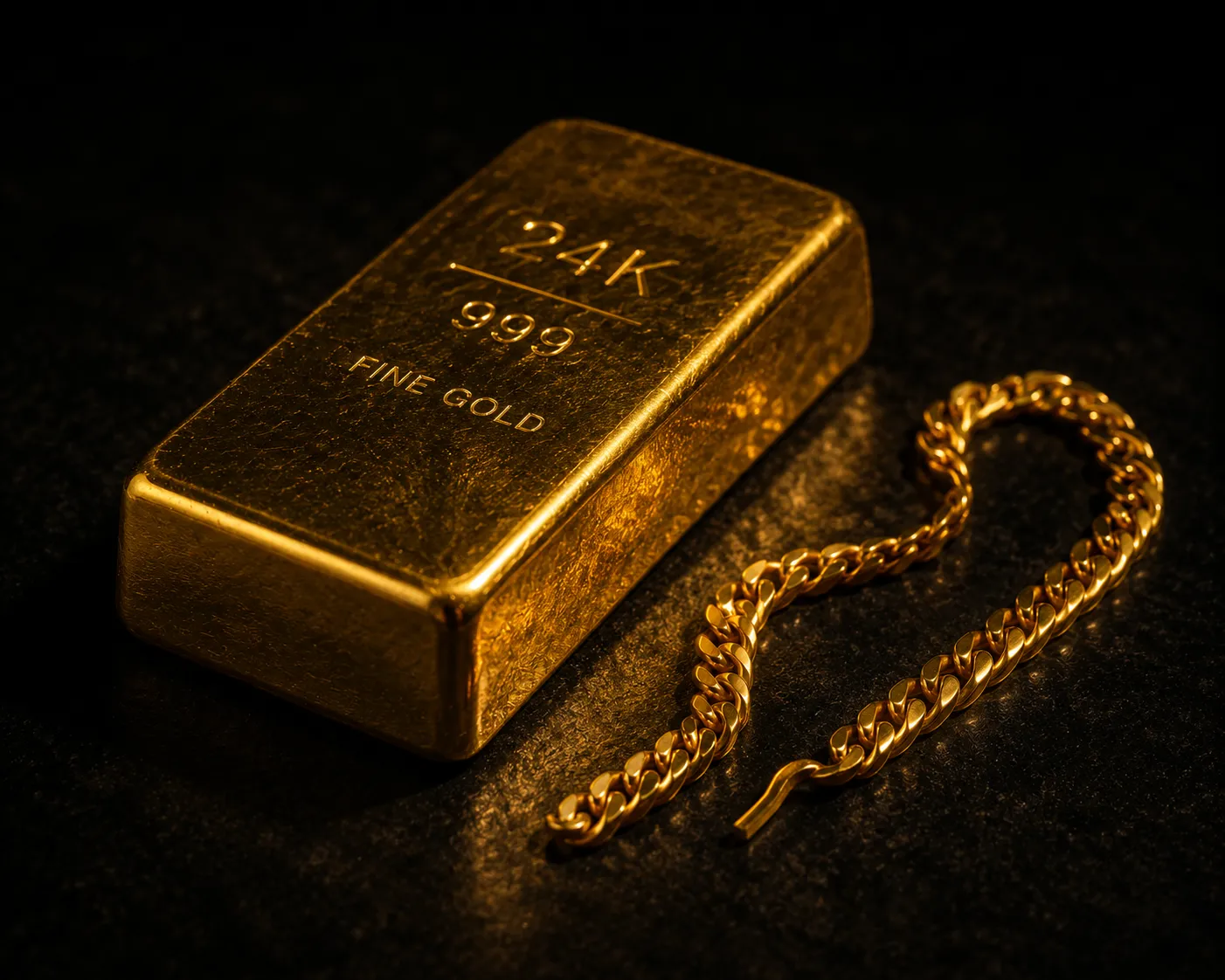
This is why 24K gold is rarely used in wearable jewellery. It is most commonly found in gold bars, coins, bullion, and investment-grade products. Not chains, not rings, not bracelets.
If someone is selling you a 24K gold chain meant for daily wear, be sceptical. It either will not hold up, or it is not actually 24K.
Best for: investment, gifting gold bullion, collector pieces not meant to be worn.
Avoid if: you actually want to wear it.
Side by side
| 10K | 14K | 18K | 24K | |
|---|---|---|---|---|
| Gold purity | 41.7% | 58.3% | 75% | 99.9% |
| Durability | Excellent | Very good | Good | Poor |
| Colour richness | Pale yellow | Warm yellow | Rich yellow | Deep yellow |
| Skin sensitivity | Higher risk | Low risk | Very low risk | No risk |
| Best use | Everyday chains | All jewellery | Fine jewellery | Investment |
| Price, relative | $ | $$ | $$$ | $$$$ |
| Wearable daily | Yes | Yes | With care | No |
What about white gold and rose gold?
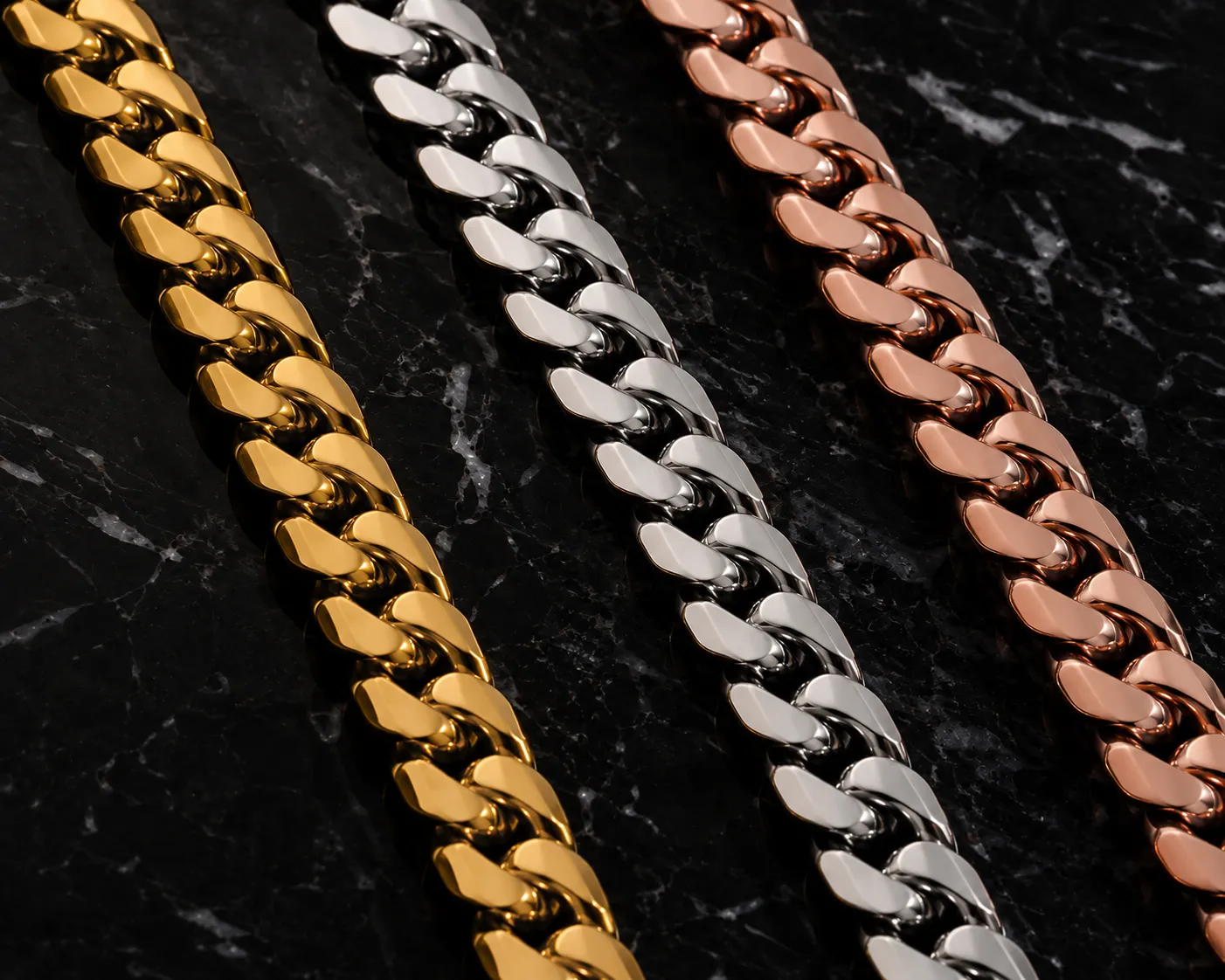
Karat applies to white gold and rose gold exactly the same way - it still describes purity. The colour difference comes entirely from the alloy mix.
White gold is yellow gold mixed with white metals like palladium or silver, then typically plated with rhodium to achieve that bright, silvery-white finish. A 14K white gold piece is still 58.3% pure gold. The rest is white alloy.
Rose gold gets its warm pink hue from a higher copper content in the alloy. More copper means a pinker colour. A 14K rose gold piece is again 58.3% pure gold, with copper making up most of the remaining alloy.
So when you are comparing 14K yellow gold against 14K white gold against 14K rose gold, the gold content is identical. The only difference is the alloy blend and the resulting colour.
How gold prices work, and how to use our calculator
Here is something most jewellery stores do not tell you: the price of your gold jewellery is directly tied to the live spot price of gold on the market. It moves every day.
That is why we built a live gold calculator, so you always know exactly what the gold in your piece is worth at today's market price, before you buy.
Enter the karat and the weight in grams, and get the live gold value instantly. It pulls real-time spot prices, so the number you see reflects today's market and not a number someone made up.
This kind of transparency is rare in this industry. We built it because we think you deserve to know what you are paying for.
Does higher karat mean better jewellery?
Not necessarily, and this is the most important thing to understand.
Higher karat means more gold. It does not automatically mean better jewellery.
A 10K Cuban link chain that is well crafted, properly weight-distributed, and finished to a high standard will outlast and outperform a poorly made 18K chain in everyday wear. Craftsmanship matters as much as karat.
What higher karat does give you is richer colour, higher gold content, and lower alloy, which matters if you have skin sensitivities or if you are buying a piece specifically for its gold value.
For most buyers, especially those buying chains, bracelets, and pendants for daily wear, 14K is the answer. Not because it is cheaper. Because it is genuinely the best combination of durability, colour, and value for that use.
Which karat should you buy?
Buy 10K if: you want the most affordable option, you are hard on your jewellery, or you are buying for daily rough use and budget is the priority.
Buy 14K if: you want the best all-around gold jewellery. Rich colour, great durability, solid value. The right choice for most buyers - chains, bracelets, pendants, rings.
Buy 18K if: you want premium gold with the richest colour, you are buying a special occasion piece, or purity is a priority and you are willing to be more careful with it.
Buy 24K if: you are not planning to wear it. You want to hold physical gold as an asset, gift gold bullion, or collect it.
Frequently asked questions
Is 10K gold real gold?
Yes. 10K gold is legally recognised as real gold in the United States. It contains 41.7% pure gold, the minimum threshold to be sold as gold jewellery. It is not fake, plated, or filled. It is solid gold.
What is the difference between 10K and 14K gold?
14K gold contains more pure gold, 58.3% against 41.7%, which gives it a richer colour and makes it slightly softer. 10K is more durable and more affordable. For everyday chains and bracelets both work well, but 14K gives you better colour and resale value.
What is the difference between 14K and 18K gold?
18K gold is 75% pure gold against 58.3% for 14K. The colour is noticeably richer and deeper. However 18K is softer, scratches more easily, and costs significantly more. For daily wear, 14K is usually the smarter choice. 18K is ideal for fine jewellery and special occasion pieces.
Is 18K gold worth the extra cost?
It depends what you are buying it for. If you want the richest gold colour and highest purity in wearable jewellery, yes. If you want a daily-wear chain that holds up to real life, 14K gives you better value.
Can you wear 24K gold jewellery?
Technically yes, but it is not recommended. 24K gold is extremely soft and will scratch, bend, and deform quickly under normal wear. It is best suited to investment pieces, not jewellery you plan to wear regularly.
Why does gold jewellery have other metals in it?
Pure gold is too soft to hold its shape in jewellery. Alloy metals like copper, silver, and zinc are added to increase hardness and durability. The alloy blend also determines the colour - more copper creates rose gold, white metals create white gold.
We carry gold jewellery in 10K, 14K, and 18K, in yellow, white, and rose gold. Use the live gold calculator to check real-time gold values before you buy, or browse the collection and reach out directly. We will help you find the right piece at the right karat.